
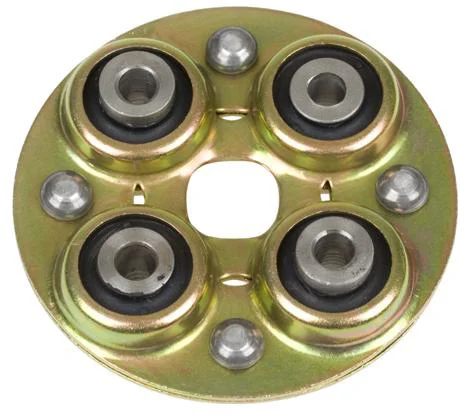
Description
When your PTO coupling starts vibrating harder than it should or making noise that wasn’t there before, it’s usually the rubber spider in the middle that’s calling it quits. This flexible center element is what cushions the shock loads and smooths out power transfer between your tractor and implement—and when it goes bad, you’ll know it. A worn spider can cause everything from annoying vibration to complete power loss when you need it most.
What You’re Getting
- Precise 3-5/8 inch diameter fits standard Lovejoy-style couplings perfectly
- Four strategically placed 5/16 inch mounting holes on a 2-1/4 inch bolt circle
- Durable construction that handles the shock loads of starting and stopping heavy implements
- Direct replacement that restores smooth, vibration-free power transfer
Built for Real Farm Work
This spider fits the standard PTO couplings used on all kinds of farm equipment—from hay balers and mowers to feed mixers and grain augers. These flexible couplings are everywhere in agriculture because they do such a good job of protecting expensive gearboxes and drive components from the shock loads that come with farm work. Whether you’re running a rotary cutter that hits rocks or a baler that suddenly grabs a heavy windrow, this spider absorbs those impacts so your equipment doesn’t have to.
Made to Last
Farm equipment doesn’t get easy duty, and coupling spiders take some of the hardest punishment on the whole machine. This one’s engineered to handle repeated shock loads, temperature extremes, and the constant flexing that comes with transferring power from your tractor to implements that don’t always spin at exactly the same speed. The material stays flexible in cold weather and won’t get brittle from heat and oil exposure.
Good to Know
Installing a new spider means splitting the coupling, so you’ll need to disconnect the driveline anyway. While you’re in there, check the coupling halves for wear on the bolt holes—if they’re wallowed out, it’s time for new halves too. Keep a spare spider on hand because they always seem to fail at the worst possible time, like halfway through hay season.
Reviews
There are no reviews yet.